


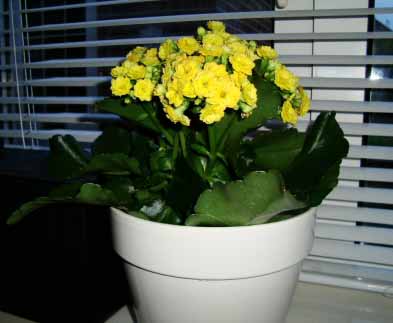
 Kalanchoe blossfeldiana, often shortened to Kalanchoe or called Flaming Katy for its vibrant blooms, is a popular, inexpensive gift plant for birthdays, anniversaries, or brightening a dull table. Like Gerbera and Pot Mum, its indoor stay is often fleeting—but it doesn't have to be.
Its main attraction: a compact plant smothered in numerous small flowers with vivid colors lasting weeks (months in cool conditions with deadheading). 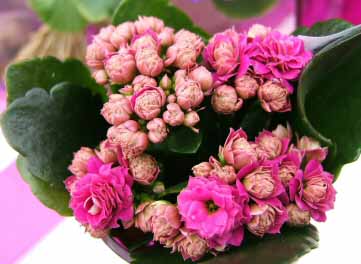 The downside: the succulent-like green leaves underneath are, to some, boring or even ugly by comparison. While waiting for rebloom, the plant occupies space that foliage plants might better fill. Many discard it after flowering—a shame, because it's easy, versatile, and often reblooms with minimal care given bright light. It's also toxic to pets/people if ingested, pest-resistant, and among the top 50 air-cleaning houseplants.
For a month or so, it tolerates dark spots—perfect for showing off blooms. Long-term, it needs very bright light or a few hours of direct sun daily. Without it, the plant declines and flowers won't return.
Forgetful waterers rejoice: succulent leaves store water for weeks. For a thriving plant, water heavily once soil has dried out significantly, then wait until dry again. In cold months, only a little water every couple of weeks.
Not a concern for succulent-like plants.
Reduce water when light or temperature levels are low
Blooming plants need no fertilizer. A few weeks after flowers fade, apply standard houseplant feed or a high-potash flowering-plant formula to encourage next bloom cycle.
Ideal: 10–22 °C / 50–72 °F. Tolerates brief excursions outside this range. Avoid frost. In high heat, follow watering rules above. Good ventilation prevents basal stem rot and botrytis.
If keeping after bloom, repot every couple of years using very free-draining mix (add grit/sand). Handle carefully—leaves are brittle and snap easily.
Easy via leaf cuttings for true-to-parent plants.
Generally slow regardless of conditions. But because the plant is small, even little growth changes its look. Max size reached in 3–5 years.
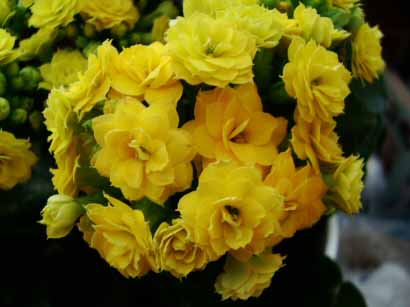 Indoors, rarely exceeds 30 cm / 12 in in height or spread—a dainty specimen.
Colors: reds, pinks, oranges, yellows, purples, whites. Singles (4 petals) or doubles (8+ petals). Typically 50+ blooms at once—a cloud of color from afar, phenomenal detail up close.
Prolong flowers: Cooler spot, away from strong heat and bright sun. Deadhead spent blooms carefully from the cluster.
Trigger rebloom: The only "trick": let it rest for a month after the first flush finishes. No fertilizer, minimal water. Then resume standard care—new buds will appear.
Kalanchoe blossfeldiana 'Calandiva Red' – Double Red Flowers
Kalanchoe blossfeldiana 'Josephine Yellow' – Double Yellow Flowers
Kalanchoe blossfeldiana 'Keruna Pink' – Double Pink Flowers
Kalanchoe blossfeldiana 'Maxi Orchid' – Large Orchid-Pink Flowers
Kalanchoe blossfeldiana 'Maxi Pink' – Large Pink Flowers
Kalanchoe blossfeldiana 'Maxi Salmon' – Large Salmon Flowers
Kalanchoe blossfeldiana 'Maxi White' – Large Pure White Flowers
Kalanchoe blossfeldiana 'Midi Coral' – Medium Coral Flowers
Kalanchoe blossfeldiana 'Midi Red' – Medium Red Flowers
Kalanchoe blossfeldiana 'Milos Golden Yellow' – Golden Yellow Flowers
Kalanchoe blossfeldiana 'Parina Pink' – Double Pink Flowers
Kalanchoe blossfeldiana 'Petero Orange' – Orange Flowers
Kalanchoe blossfeldiana 'Shala Salmon' – Salmon Flowers
Kalanchoe blossfeldiana 'Wizard Mt. Rushmore' – Wizard Series with Unique Colors
Copyright © www.100flowers.win Botanic Garden All Rights Reserved