


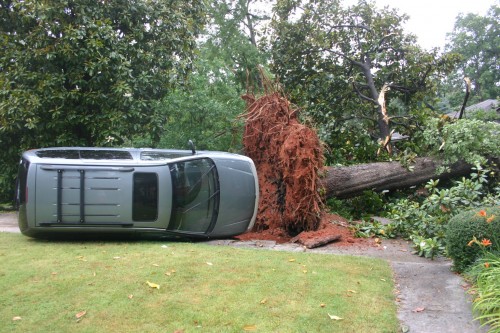
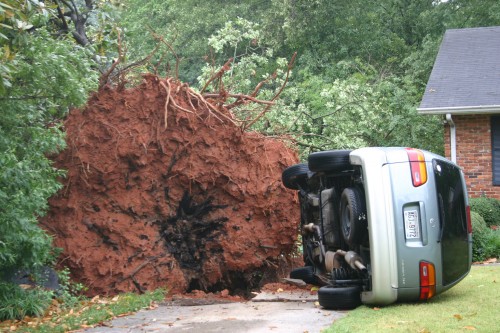
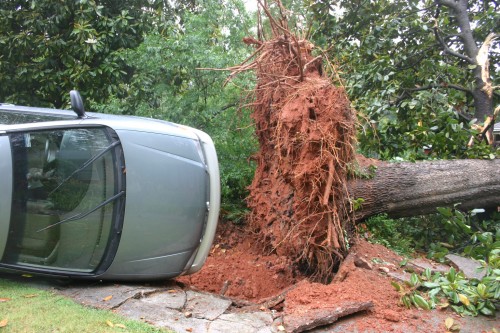
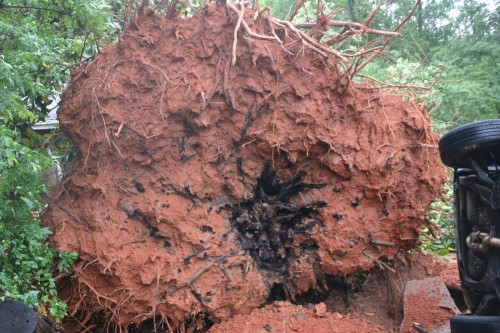
After a storm, a large tree flipped a car in a driveway. The root plate revealed the truth: in heavy clay, trees develop shallow, pancake-like root systems spreading beyond the drip line—no deep taproot. This broad but shallow anchor fails in saturated soil with high winds.
Understanding this root morphology explains why even healthy-looking trees can topple. Proper species selection, soil improvement, and avoiding root zone disturbance are key to stability.
Dealing with Tree Roots in the Lawn: Removal and Prevention
Tree Roots Lifting Pavers: Switch to Gravel or Raise Patio
Italian Cypress Roots and Fiberglass Pool Damage: Diagnosis and Root Barrier Solution
Vinegar and Salt Near Tree Roots: Risks and Ant Ecology
Diagnosing Two Problem Trees: Borer and Canker
Identifying and Managing Slime Flux (Bacterial Wetwood) in Mature Cottonwoods
Olive Tree Regrowth from Roots: Managing Persistent Sprouts
Redwood Top Dieback: Internal Decay, Monitor for Hazard
Persimmon Seedling Timeline: Fruiting Age and Pollination Biology
Cutting Douglas Fir Roots for a Road: Stability and Health Risks
Willows Yellowing in NM Drought: Water, Not Ants
Tree Roots Threatening House Foundation: Cypress and Popcorn Tree Risks
Copyright © www.100flowers.win Botanic Garden All Rights Reserved