


When side yards rival the house in scale, the default—turf grass or arboretum—wastes potential. Instead, devise a distinct design theme: use mature trees and shrubs, emphasize distant vistas, create foreground vignettes with plants, art, and furnishings. Think big, go bold, plan thoughtfully.
Two details make this grand lawn human-scaled. Foreground: deep planting beds mirrored by low boxwood hedging create a welcoming threshold that slows pedestrians. Distance: a curvaceous arbor acts as a doorway to a hidden garden, its placement successful because the lawn continues beneath like a path, while side plantings prevent shortcutting.

Andrew Renn
Lawn, path, planting bed, and fence align in parallel—a treatment that could feel severe until softened: bluestone walkway bands the lawn; limbed-up trees planted hedge-like; clipped boxwood balls echo tree forms; natural cedar fencing with horizontal boards silhouettes sculptural trees, reinforcing contemporary lines.

Randy Thueme Design Inc. - Landscape Architecture
A mature shade tree creates a canopy, filtering sunlight into dappled patterns on ferns and hostas—a distinct sense of separateness. A crushed stone meandering path simplifies navigation and maintenance (wheeled carts welcome).

Re-imagined
A rounded crushed-stone "carpet" with block edging and flagstone path links large side and front yards. Two turquoise Adirondack chairs and a side table create a front-porch-like bonus seating area—attractive and neighbor-friendly.

Westover Landscape Design, Inc.
This side yard's width equals the architecture's height—a classic design technique. Longer than wide, it divides into thirds: a colorful bed against the house (permanent plantings near structure, seasonal at edge); a graphic central walkway of 30-inch-square pavers with magnetic rhythmic lines leading to a seating destination; an allée of trees at the far edge, soon to visually balance the architecture and provide enclosure.

Narofsky Architecture + ways2design
The lawn yields to a prairie-inspired meadow—"drifts of naturalistic plantings" massed in irregular rows tiered by height. Tall feather reed grass (Calamagrostis x acutiflora 'Karl Foerster') catches morning light; Joe Pye weed (Eupatorium purpureum 'Atropurpureum') adds lavender domes; unstructured grasses continue foreground. A distant tall arbor beckons exploration.

The Garden Consultants, Inc.
A low wall encloses a sophisticated private courtyard with stone-banded "patterned carpet" flooring. Clipped boxwood "baseboards" connect horizontal and vertical planes. Minimalist furnishings—two chaises with lemon-yellow pillows—balance a distant oval-clipped tree and foreground stainless steel orb. A jewel box revealing treasures.
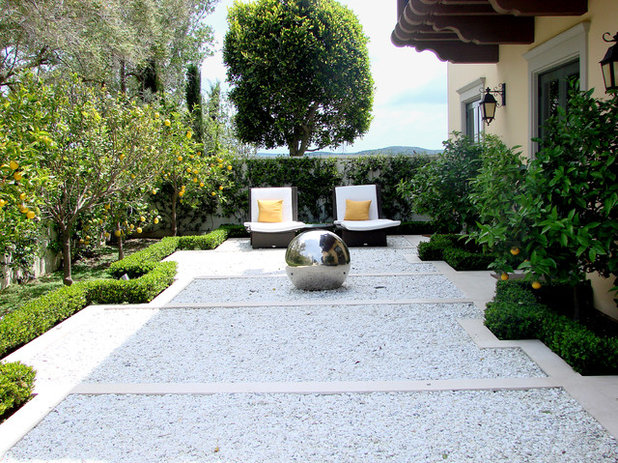
AMS Landscape Design Studios, Inc.
Sometimes simplest wins: a wide lawn band (six-plus feet) connects two shade gardens. The vast grassy swath occupies "negative" space, balancing "positive" mature shade trees flanking the central path.

Woodburn & Company Landscape Architecture, LLC
How to Level Low Sod: A Simple Organic Fix for Uneven Lawn
Comprehensive Weed Management for Michigan Lawns
Choosing the Right Lawn Tractor: Types, Sizes, and Features for Your Property
How to Choose the Best Lawn Shape for Your Yard
Revive Your Lawn: Soil Science, Grass Types & Sustainable Care
Renovating a Weedy Lawn: Steps for a Fresh Start
Enjoy a Perfect Lawn Year-Round Without the Weekend Work
How to Fertilize Your Lawn Correctly for Maximum Health
Lawn Aeration: The Secret to a Healthier, Greener Lawn
Spring Lawn Care Essentials for a Neighborhood-Leading Yard
Achieve the Best Lawn in the Neighborhood with These Pro Tips
How to Choose the Best Grass for Your Yard: A Practical Guide
Copyright © www.100flowers.win Botanic Garden All Rights Reserved