


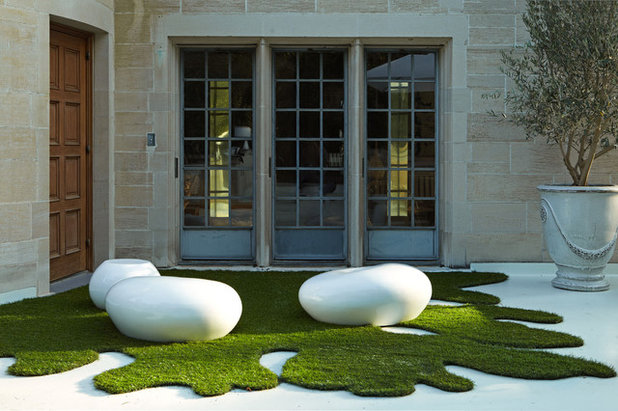
Synthetic turf has migrated from sports fields to home landscapes, solving problems that vex many gardeners. Is it right for you?
Pros: No mowing, trimming, watering, fertilizing, or pesticides. Reduces water bills. Looks great year-round. Widely installable. High-quality versions are nearly indistinguishable from real grass.
Cons: Expensive, requires skilled installation. Cheap types look unnatural. Heats up quickly—poor for intense southern sun unless shaded.
Professional installation: up to $20+/sq ft. Turf alone: $2–3/sq ft, but extensive prep drives total cost. Best used in smaller areas for optimal look and value. Investment recoups over time via lower water, chemical, and maintenance costs.
Wide quality range—you get what you pay for. Seek brown blades blended in for naturalism. Ask installers for recommendations. Strong DIYers can tackle small areas; others should hire pros.
Have faux grass? Share your experience in the comments.


Concrete Pad Removal: Lawn Establishment on Compacted Fill
Fescue Grass: Cold-Hardy, Fast-Establishing for Northern Lawns
Buffalo Grass: The Native Turf for Tough Conditions
Choosing the Perfect Artificial Grass Carpet for Your Space
Artificial Grass in Anaheim: Applications, Generations, and Selection Guide
Pampas Grass Care: Pruning, Blooming, and Division
Liriope (Monkey Grass) Care: Trimming, Control, and Weed Management
Native Grass Seed: Ecological Restoration, Erosion Control & Low Maintenance
Zoysia Grass Plugs: Meyer, Emerald & El Toro for Every Climate
Creative Uses for Artificial Grass: Beyond the Lawn
Artificial Grass: The Eco-Friendly, Low-Maintenance Lawn Alternative
Artificial Grass Carpet: The Smart, Beautiful Solution for Modern Lawns
Faux Grass: Not Your Dad’s AstroTurf—Real Look, Real Benefits
Pre-Select Colors for the Best Paint Estimate and Project Success
Copyright © www.100flowers.win Botanic Garden All Rights Reserved