


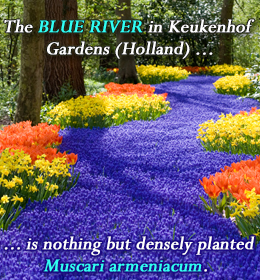
 Did You Know?LAMPASCIONI, a traditional food from Puglia in southern Italy, is made of Muscari comosum bulbs.If you are an avid gardener who loves the color blue, you will definitely adore muscari plants. These plants produce blue, urn-like flowers that are arranged on spikes, and resemble bunches of grapes. Otherwise known as grape hyacinths, muscari plants bloom through the spring. They are easy to grow and are evergreen. These plants are perfect for flower beds, rock gardens, woodland gardens, borders, and as under-plantings. Most of the muscari species produce flowers in shades of blue, but white muscari hybrids are also very popular. In some species, the flowers on the upper part of the spike have a different shape and color.
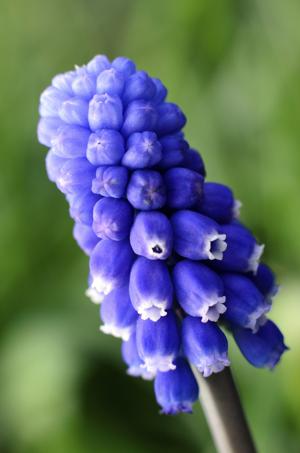 Muscari armeniacumMuscari armeniacum is the most commonly found muscari species. Otherwise known as Armenian grape hyacinth, the plant produces deep blue flowers with white margins. Nowadays, cultivars of this plant are available in different shades of blue. There are some hybrids in white and pink too. Some of these plants produce scented flowers. Muscari armeniacum 'Album' has white flowers. Muscari armeniacum 'Lady Blue' is a cultivar with silvery-gray flowers. Muscari Valerie Finnis is another variety with ice-blue flowers and a mild fragrance. The plant is named after a famous British gardener and photographer Valerie Finnis, who discovered the plant in her garden.
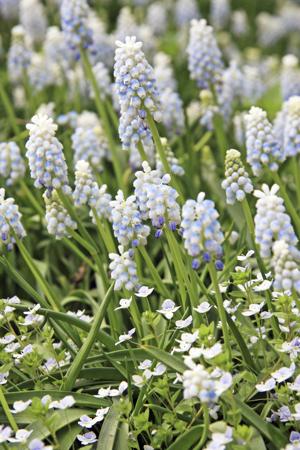 Muscari armeniacum 'Lady Blue'
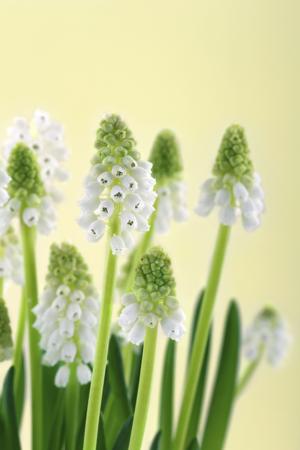 Muscari armeniacum 'Album'
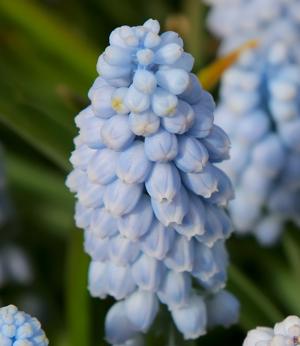 Muscari armeniacum 'Valerie Finnis'Muscari botryoidesMuscari botryoides is considered as an invasive species with purple-blue flowers. The sterile flowers on the upper part of the spike are paler, whereas the lower ones are globular and darker. While the lower ones are droopy, those on the top face upwards. You may also find a white version named Muscari botryoides 'Album'.
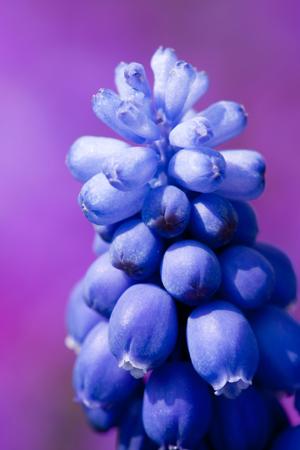 Muscari botryoides
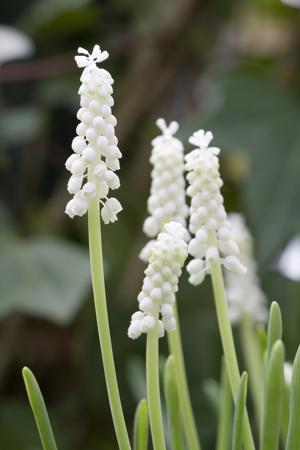 Muscari botryoides 'Album'Muscari aucheriMuscari aucheri has broad leaves and grows to a height of around ten inches. Each plant has around three to four leaves, but the spike is densely arranged. The flowers on the lower part come in darker shades of blue and those on the top are too pale or white. There are various popular cultivars named blue magic, mount hood, white magic, etc.
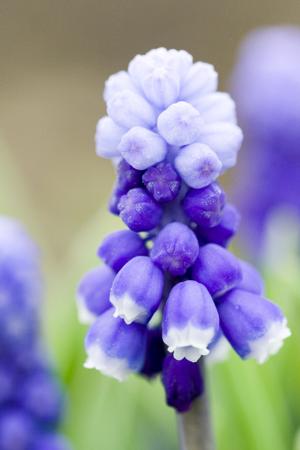 Muscari aucheri
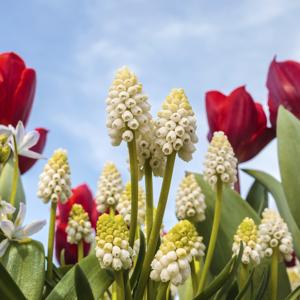 Muscari aucheri 'White Magic'Muscari latifoliumMuscari latifolium is also broad-leaved, and each plant produces one or two leaves. The maximum height of this plant is 15 inches, but some may grow taller. The flowers on the lower side of the spike are dark purple and those on the upper parts are pale violet or blue. The flowers are slightly oblong or tubular in shape.
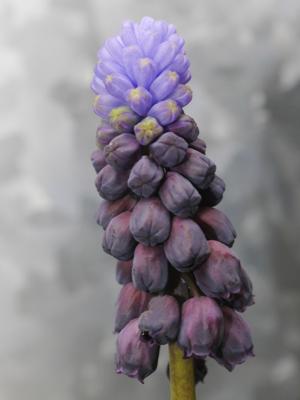 Muscari latifoliumMuscari neglectumMuscari neglectum is also an invasive plant with dark purple flowers. The flowers are so dark that they look almost black. The crown of the spike has some sterile flowers that are lighter in color. As in many other muscari species, the flowers have white tips.
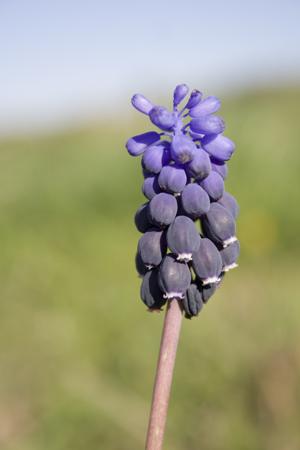 Muscari neglectumMuscari comosumMuscari comosum is otherwise known as Leopoldia comosa, and is presently classified under the genus Leopoldia. The plant is also known as tassel hyacinth, hairy muscari, edible muscari, tufted grape hyacinth, etc. The flowers have stalks, and those on the top are bright violet. The fertile flowers on the lower parts are darker and bell-shaped. This plant may also turn invasive.
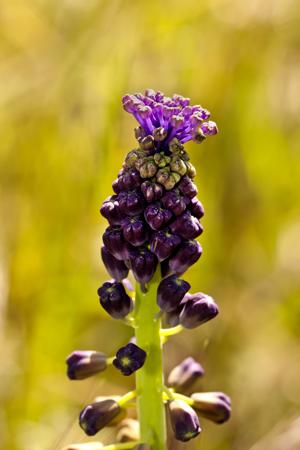 Muscari comosumMuscari azureumMuscari azureum is a small plant with one or two leaves and a dense spike with bell-shaped flowers. The plant belongs to the genus Pseudomuscari, but was earlier classified under the genus Muscari. So, it is widely known as a muscari plant. The flowers are sky blue in color, and each flower has dark stripes that run through the center of the segments.
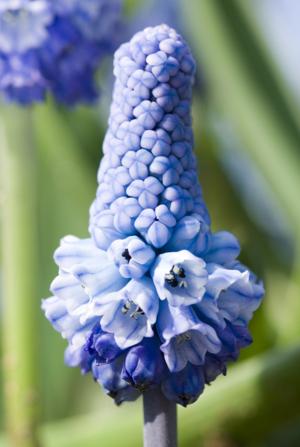 Muscari azureumHow to Grow Muscari PlantsMuscari plants are hardy and are easy to grow. They survive well with minimum maintenance. The bulbs have to be planted during early fall and the blooms appear during spring. You can grow them outdoors, directly in the soil or in containers. Muscari plants can be grown indoors too. Given below are some tips for growing muscari plants successfully.
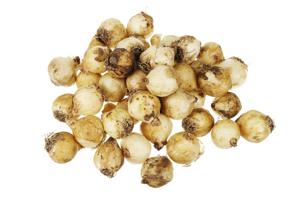 Muscari bulbs
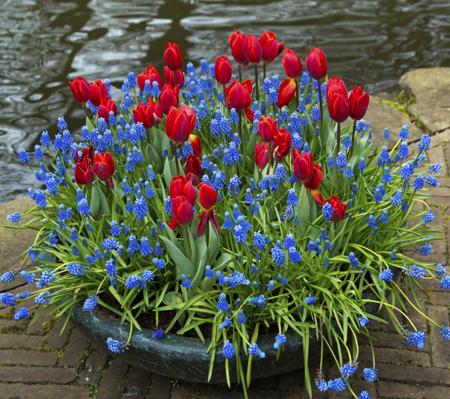
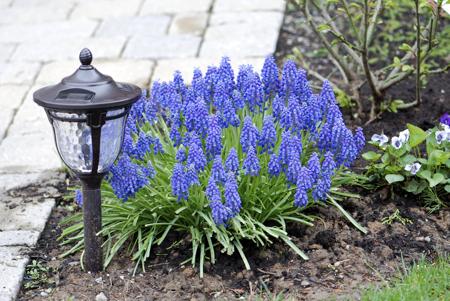
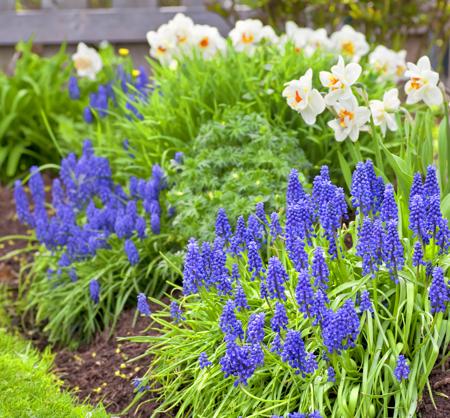
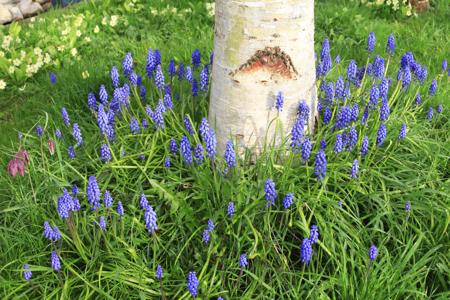
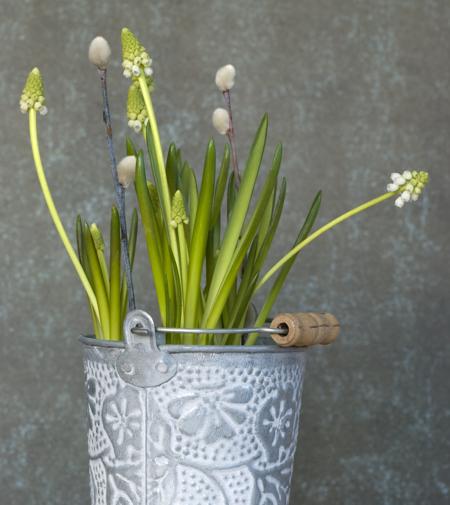
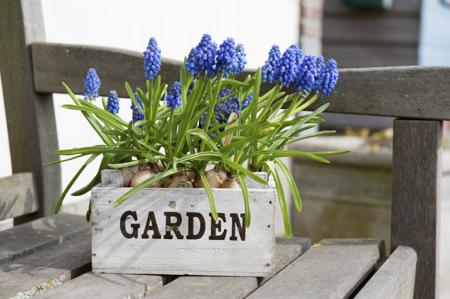 So, make use of these tips and grow muscari plants. As mentioned above, try planting them in different styles. Combine them with other small flowering plants for a colorful visual treat. When it comes to the toxicity of muscari plants, reports are contradictory. So, it is better to avoid ingestion of any part of these plants.
Copyright © www.100flowers.win Botanic Garden All Rights Reserved