


Foliage is what really counts. Flowers, stems, bark, fragrance—all matter, but from a design perspective, leaves are paramount, and anything with a long season of interest is worth noting.
In my Vermont garden, where frost hits by mid-October, plants with good form that persist through cold weather are essential. While I cut back, pull, dig, and haul in my seasonal rounds, I'm thankful for the stalwarts that remain, their foliage glistening with beaded raindrops as Canada geese fly south.

Two favorite edibles, Swiss chard (Beta vulgaris) and kale (Brassica oleracea), easily grown from spring through early winter in cold climates. Both are vitamin-rich, delicious lightly sautéed with garlic in olive oil.
Cold-season annuals best grown from seed in early spring or fall, though garden centers increasingly offer edible transplants. Beautiful in a potager or vegetable garden, even lovelier in a large sunny container.

This clump sparkles with frost on cold mornings. Textured foliage holds up through freezing rain, hail, and hard freezes—one of the most resilient plants I grow. Cultivar 'Helen Von Stein' has sporadic flowers and large leaves on fuzzy stems. Mediterranean origin: requires full sun and well-drained, not-too-rich soil (add gravel to planting hole). Especially useful along walkways and near boulders, where soft textures contrast with stone.

Sow seeds directly into compost-rich beds in August for late October harvest—almost too pretty to pick! A cool-season crop that looks great along walkways or tucked into beds and containers. Seek heirloom types like 'Speckled Trout' or 'Merlot', available by mail or in cell packs at garden centers.

While most perennials are cut back with cold weather, lady's mantle thrives, collecting droplets on ruffled leaves and looking perky under gray skies. I grow it around Summersweet shrubs, which turn yellow late in the season.
In mid-June, airy chartreuse flowers partner well with peonies, blue Bachelor Button (Centaurea spp., zones 3–8), and tall white phlox. Flowers are good for cutting, but I value the plant for its dependable form when everything else has withered.

A must-have in planting schemes, lasting well into early winter with good form. One of the best plants for overall functionality—used as massing ground cover or accents, they look good almost all the time.
Seek unusual colors like burgundy or chartreuse, and variegated forms with silver accents. Place in containers by doors and along front walkways. Those with short growing seasons know this perennial's value.
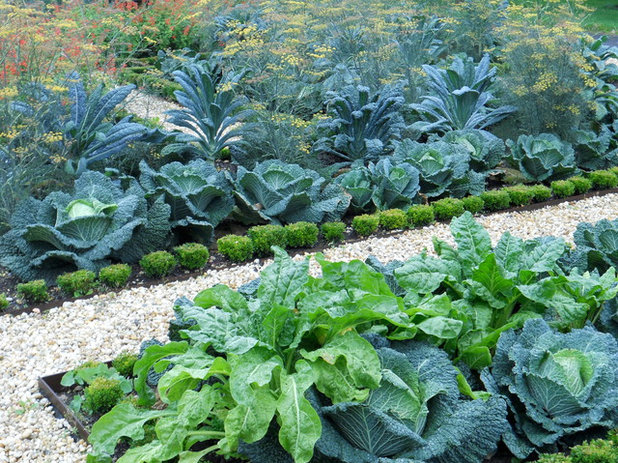
This edible garden at the Montreal Botanical Garden features pebbled 'Lacinato' kale (Brassica oleracea 'Lacinato'), also known as Tuscan kale, combined with cabbage and sorrel in a mid-November composition showcasing symmetry and repetition.
Tuscan kale, a minestrone staple, has been grown in Italy since the 17th century and appears in Thomas Jefferson's Monticello gardens in 1777.

Looks great with a carpet of leaf litter or trailing ground covers like lamium or golden creeping Jenny (Lysimachia 'Aurea', zones 3–9). Unbothered by slugs or defoliating insects, it holds its form through slush and snow, looking cool and unflustered at year's end.
Some varieties have upward-facing blooms, but most have demure, nodding flowers that open early in the season.
Pollinator Paradise: Plants That Attract Hummingbirds and Butterflies
Garden Design Decisions: Borders, Supports, Soil, and Plant Arrangement
Garden Protection Tools: Mechanical Barriers and Application Equipment
Alpine Plants & Seasonal Bedding: Two Ways to a Beautiful Garden
Gardening on a Budget: Free & Cheap Supplies
Fertilizing Tomatoes Naturally: Build Soil Health, Skip Synthetic Salts
Professional Garden Design in Wirral: Creating Year-Round Beauty
Gardening as Self-Expression: How Your Garden Reveals You
Design a Living Masterpiece: Create a Garden That Blooms All Year
Garden Design on a Budget: Beautiful Landscapes Without Breaking the Bank
Creating a Garden Plan: From Vision to Planting
Flower Garden Design Ideas: Planning Beautiful Beds and Borders
Copyright © www.100flowers.win Botanic Garden All Rights Reserved