



Photo by Thinkstock
Every time I open a plant catalog or see a TV commercial for $99 raised garden bed kits, I cringe! You don't need to spend that kind of money to build your own 4×4-foot bed—or even a 20-foot-long one.
My husband builds mine. He buys two 1×8-inch cedar boards (which resist rot), sold in 8-foot lengths—perfect for 4×4 beds. Cut each plank in half to get four 4-foot pieces. Many home improvement stores will make the cuts for free.
He also buys a 3-foot length of 1×1-inch pine stake, cuts it into four pieces, and uses them to nail the cedar boards at the corners for bracing. That's it!
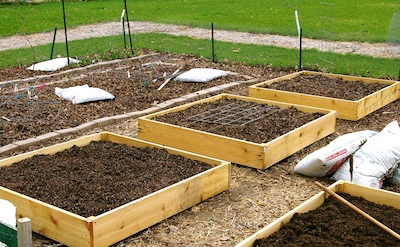
Grouping several raised beds creates a substantial vegetable garden that's easy to maintain, with minimal weeding and fast-maturing crops.
I place the boxes on cleared ground. We cut and roll up our turf, but many gardeners skip this step—the added 6 inches of soil will bury most grass and weeds beneath. After positioning the boxes (four or five grouped together makes a good-sized garden), I put down three layers of newspaper to suppress any errant weed or grass seeds. The paper degrades within weeks and feeds the soil.
Another fast, cheap method: concrete construction blocks. Bonus: their holes can be filled with soil mix and planted with herbs or strawberries. The extra heat from concrete is perfect for Mediterranean herbs like rosemary and lavender. Strawberry plants grow huge and fruit quickly in the holes. Each block is 16 inches long by 8 inches high; I buy mine at big-box stores for the best price. Beds 13 feet or longer by 4 feet wide are cheaper with blocks than cedar boards.
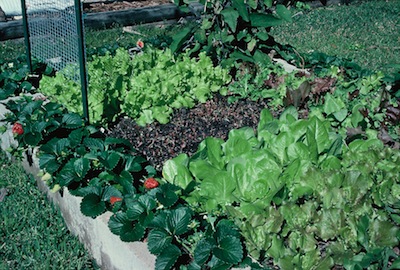
Cement construction blocks are a cheap, effective method for building raised beds.
You'll plant seeds and transplants close together because the beds are smaller and the soil richer. But plants grown close in raised beds mature faster—they compete for nutrients and sunlight, sensing nearby plants via the green light spectrum and adjusting their metabolism. Several university studies have proven this competition syndrome.
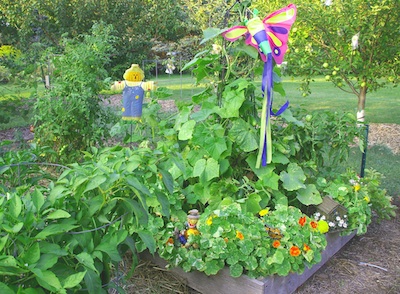
This 4×4-foot bed is crowded with productive peppers, cucumbers, a tomato plant, and insect-repelling edible flowers.
The more organic matter in soil, the better. Soil microbes thrive, oxygen and water reach roots easily, and plants flourish. Here's the recipe I've perfected over a decade:
For one 4×4-foot raised bed (multiply for larger beds):
If using grass clippings, ensure they're from a lawn not sprayed with herbicides or fertilized with granular herbicides—both persist and can kill plants for up to three years after application.
Mix all materials with a hoe or cultivator and water well. Mulch generously with organic matter—more leaves, clippings, or straw.
~ By Doreen G. Howard
Raised Bed Gardening: Space-Smart, High-Yield Growing for Modern Spaces
How to Make a Hot Bed for Your Garden: Traditional Heat From Manure
Gardening in Raised Beds: Design, Build & Grow Better
Raised Bed Gardening: Better Soil, Drainage, and Accessibility
The Best Soil for Raised Bed Gardening: Mix, Test, Maintain
Build Raised Garden Beds the Easy Way: Complete DIY Guide for Abundant Harvests
Raised Bed Gardening: Complete Guide to Building, Filling, and Enhancing
Building High Raised Beds for Accessible Gardening
How to Build a Raised Garden Bed: A Complete DIY Guide
Budget-Friendly Raised Garden Bed Ideas Using Recycled Materials
Raised Bed Gardening: Benefits for Soil, Access, and Yield
Raised Bed Gardening: Easier, Earlier, More Productive
Don't Build Square Foot Gardening Beds—Buy Vinyl Raised Beds Instead
Copyright © www.100flowers.win Botanic Garden All Rights Reserved