


(D = deciduous, E = evergreen)
A very graceful, feathery plant, excellent for seaside districts since it withstands salt winds admirably. Inland, it thrives even in poor and limy soil. Clipping in February or March improves its appearance.
Tamarix anglica (E), 8 ft. A fairly erect plant with pinkish-white flowers in July and August. New wood is reddish-brown. Plant small specimens October to March, 1½ to 2 ft apart.
T. gallica (semi-E). Similar habit and height to T. anglica, but young wood is darker, making an even sharper contrast with fresh green feathery foliage. Plant October to March.
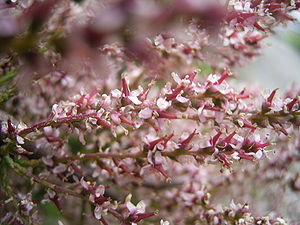
Tamarix gallica in flower (Photo credit: Wikipedia)

Starting a Garden: Begin Small, Grow with Confidence
Decoding Tomato Plant Labels: Disease Resistance Codes and Growth Habits Explained
Why Starting Vegetables Indoors Gives You a Head Start
Creative & Unusual Plant Containers: Beyond Standard Pots
Variegated Plant Discoveries: The Stories Behind Two Stunning Sports
Heavenly Bamboo (Nandina domestica): The Complete Growing Guide
ZZ Plant (Zamioculcas zamiifolia): Care Guide for Stylish Low-Maintenance Plant
Honeysuckle Vine: Fragrance, Wildlife, and Vertical Beauty
How to Plant a Strawberry Pot: Tips for Bountiful Harvests in Small Spaces
Orchid Plant Basics: Diversity, Propagation & Humidity Needs
Best Flowers to Plant in Spring for Fall Blooms
Forget-Me-Not: Growing the Flower of Remembrance and Love
Purple Passion Flower (Passiflora incarnata): Native Vine for Beauty and Calm
Dieffenbachia Propagation: Stem Cuttings & Air Layering Step-by-Step
Copyright © www.100flowers.win Botanic Garden All Rights Reserved