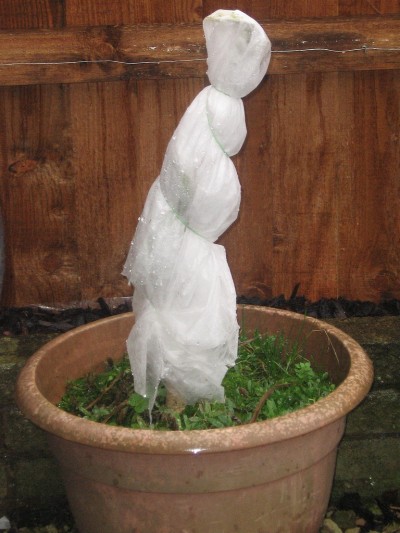
Container plants face winter with roots exposed to 20–30°F colder temps than in-ground. Without protection, even hardy perennials die. Here's the complete overwintering protocol: preparation, insulation, storage options, and spring wake-up.
Why Containers Need Special Winter Care
- Small soil volume = freezes solid, thaws fast, cycles repeatedly.
- Roots lack earth's thermal mass. Hardy zone rating drops 2 zones in pots.
- Freeze-thaw heaves roots, cracks pots, ruptures cells.
- Winter sun + frozen roots = desiccation (winter burn).
- Wet soil expands → cracks ceramic/terra cotta.
Pre-Winter Preparation (6–8 Weeks Before First Freeze)
- Stop fertilizing by Sept 1 (most zones). No tender new growth.
- Reduce watering as growth slows. Moist, not wet.
- Clean up: Remove dead leaves, debris (disease hosts).
- Prune: Deciduous → cut to crown. Evergreen → light shape only.
- Check drainage: Clear holes. Elevate pots (feet/bricks).
Outdoor Overwintering Strategies
Zone 6+ (Mild Winters): In-Place Protection
- Cluster pots, smallest center, against protected wall (south/east).
- Wrap group: burlap + straw/leaves, or bubble wrap + tarp.
- Mulch soil surface 4–6".
- Water before hard freezes. Check monthly.
Zone 5 and Colder: Active Protection Required
- Unheated garage/shed: Best for most. Dark, 30–40°F. Water monthly.
- Cold frame / hoop house: Light + protection. Vent on warm days.
- Bury pots: Trench to rim, backfill with leaves/straw. Best insulation.
- Insulated boxes: Rigid foam boxes, pots inside, mulch cover.
Marginal Plants (Zone = Your Zone or +1)
- Must come indoors: cool basement (40–50°F), sunny window, or grow lights.
- Treat as dormant houseplants: minimal water, no fertilizer.
Pot Material & Winter Survival
| Material | Survival | Action |
|---|
| Fiberglass, resin, concrete, metal, wood | Good | Insulate sides, mulch top |
| Thick glazed ceramic | Fair | Protect from saturation, wrap |
| Terra cotta, thin plastic, cheap ceramic | Poor | Move indoors or bury |
Rodent & Pest Protection
- Mice/voles eat roots, bark. Hardware cloth cylinders around trunks.
- Deer/rabbits browse evergreens. Fencing, repellents.
- Slugs in mulch. Beer traps, diatomaceous earth.
Spring Transition (When Nights Consistently >32°F)
- Remove wraps gradually (1 layer/week).
- Check for cracked pots—replace before root growth.
- Scratch top 2" soil, add compost.
- Resume watering as growth emerges.
- Fertilize at ½ strength when new leaves appear.
- Harden off: shade → sun over 7–10 days if moved from garage.
The "Plant Pot-and-All" Method
For in-ground perennials in nursery pots: dig hole, set pot to rim, mulch. Spring: lift, plant or pot up. Zero root disturbance.
Overwintering containers is about managing the freeze-thaw cycle. Insulate the roots, protect the pot, reduce water, and match the strategy to your zone. Your perennials will thank you with vigorous spring growth.
Copyright © www.100flowers.win Botanic Garden All Rights Reserved


