


Look, out in the kitchen! It's a berry, it's a seed, it's a Superfood! These ordinarily mild-mannered and familiar foods come to you in their secret identity as Superfoods. Disguised as simple sweet potatoes or normal almonds from a great metropolitan supermarket, these Superfoods fight a never-ending battle for health, nutrition, and the American way, Possibly if you eat enough of them, you, too, can be faster than a speeding rabbit, more powerful than a Roto-Tiller and able to leap tall saplings with a single bound!
*Not intended to cure or treat any disease.
Not too long ago, my beloved husband read to me from a list he had found somewhere online. "Hey, blueberries are a SUPERFOOD, too!" Yes, dear. "And so are walnuts, and scallops, and pineapple!" Mmm-hmm. Haven't I been trying to explain just that for most of our years together? Some foods are healthier than others, dear.
But exactly what are Superfoods? Turns out nobody can really say. There is no definition for a Superfood. The word was first used, apparently, in the August 1998 edition of Nature Nutrition. It was used with the implied meaning that some foods are so good for you they could be called "superfoods." The new word caught on, and now it seems you can't look at the cover of a magazine without being assailed with the newest Superfood.
Some foods we're pretty sure aren't good for us. While ice cream may have calcium and a candy bar with coconut and almond at least has coconut and almond, foods like cheese curls—with only the ghost of association with actual cheese—really have nothing to commend them. If refined sugar or fat are "empty calories"—calories with no nutrition—then Superfoods would feature those calories which are rich in nutrients, vitamins, minerals.
Superfoods is a term that seems to be reserved for those foods that go over and above the typical expected nutritional content for a food, without fortification. You needn't eat a huge amount to get a 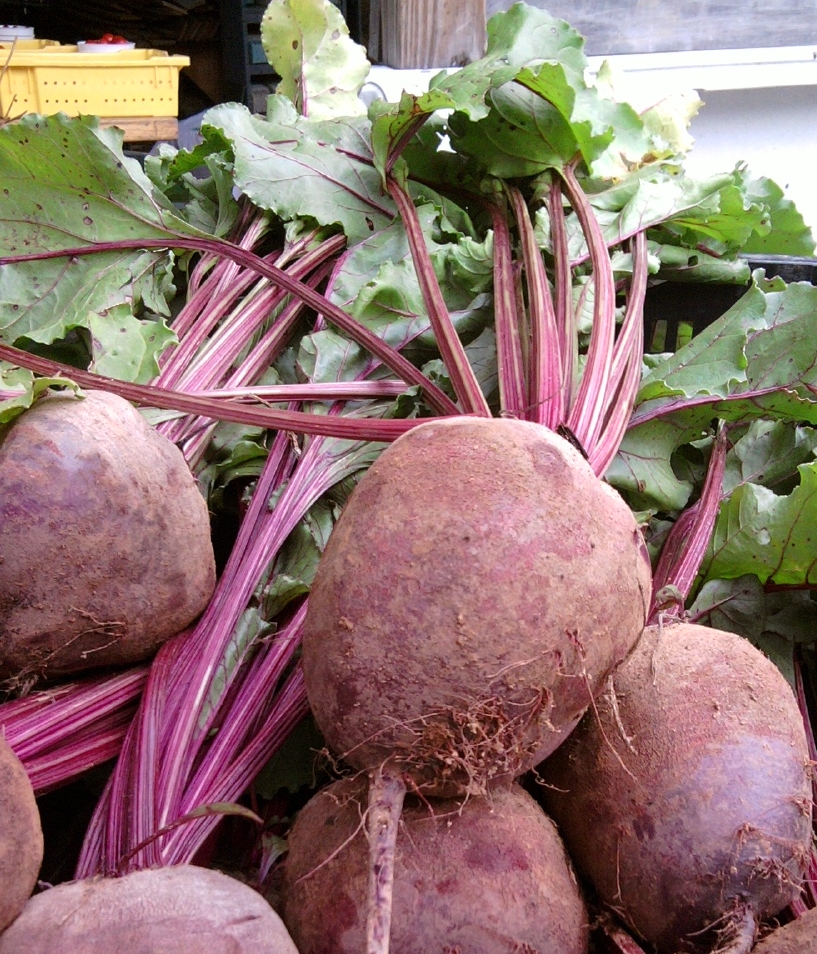 lot of nutrition. In other places Superfoods are called functional foods.
The concept of eating a certain food to obtain a certain health benefit is not new. Men have been eating oysters and women drinking cranberry juice for years. (NB: Cranberry juice actually works.) But the specific marketing of specific foods to provide protection against specific ailments is illegal, unless they are scientifically shown to give a better outcome than not eating the food. In short, the term Superfood doesn't really mean anything. and is not a technical term with a specific meaning.
[Left, Superfoods beets and beet greens.] In the past, "super" foods were those that provided a maximum number of calories per human toil. Alcohol was revolutionary for late Neanderthal societies which learned to harness the power of fermentation; potatoes also revolutionized the society of Europe because all of a sudden it was possible to skip the lean years and not have half the family die of malnutrition. With the introduction if the potato, food energy was multiplied and the population responded with what we today would call an uptick.
Still, sailors get scurvy, a diet of only white rice leads to beriberi, and lack of niacin leads to pellegra. All of these diseases are nasty; far better to make sure your diet includes Vitamin C, thiamine and niacin. By the first third of the 20th century, people started expecting certain foods to contain certain nutrients. Milk has calcium, meat has protein, spinach has iron and oranges have Vitamin C, right?
During the 20th century, researchers not only discovered the lettered vitamins and minerals, they went on to identify micronutrients, anti-oxidants, and phytochemicals, all of which should be obtained from food. There are also substances for which dietary scientists don't yet know the purpose. For instance, when rice or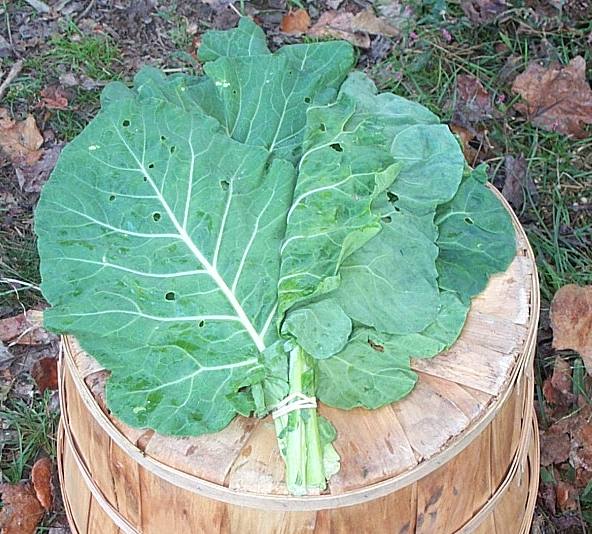 wheat are stripped of their bran and germ to become white rice and white flour, they lose all the wonderful substances that are in the bran and germ. When they are fortified to make up for losing those important parts, they are fortified only with B vitamins. We don't know all of the substances that are removed from rice and wheat—it took us centuries to get them all out, it may take us centuries more to identify everything white foods are mssing and put it all back in.
In the meantime, we are asked to pay premium prices for so-called Superfoods. A Superfood is defined only as a food which is extra nutritious. Examples of Superfoods range from the mundane (wheat germ) or the disgusting (kombucha tea) to the sublime (avocado) to the exotic (goji berries). We are urged to eat seaweeds, fermented grains or tasteless berries, all "Superfoods," and drink green tea, black tea, apple cider vinegar. or simply spring water. [Above right, Superfood collard greens.]
A super diet
The best diet we know of includes lots of variety. Be sure to consume a wide range of brightly colored fruits and vegetables. Any grains or starches should be as close to natural and whole as they can come. For instance, don't ruin a perfect sweet potato (on many Superfood lists) with marshmallows, butter and sugar. Eat plenty of texture, if you can. Eat nuts, seeds, and mushrooms. Eat foods that are crunchy, creamy, grainy, gritty, wet and dry. St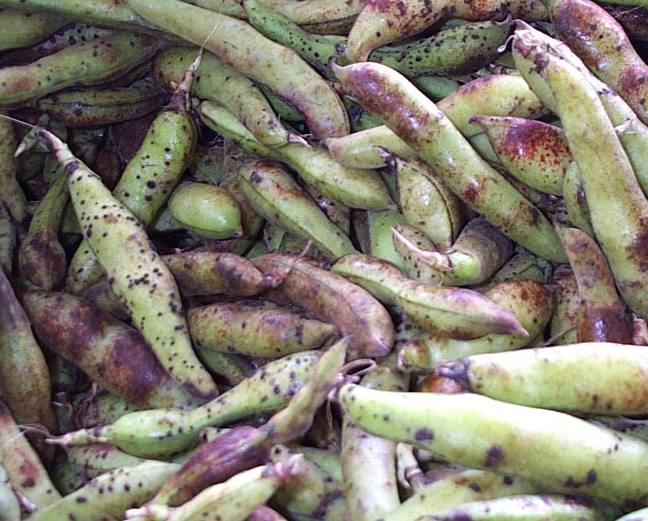 rive for as varied a combiantion of fresh, natural whole foods as possible.
There are many lists of Superfoods available. They are even listed as "grocery store Superfoods" (live yogurt and canned beans) vs. "exotic Superfoods" (acai berries or kombocha tea). Put "superfood" into your favorite search engine and see what you come up with.
When my kids were little, I used to cook them stir fried vegetables with brown rice. "Find the roots" I would say. "What are we eating that's a seed? What is a fruit? Show me the fungus! Which is a stem, a leaf?" They learned about plant parts by eating a wide variety of foods. For us, broccoli was not just dark green baby trees, it was stems with buds. And broccoli is (and has been for years) you guessed it, a Superfood. [Above right, Superfoods fava beans.]
Consider adding some Superfoods to your diet, or even better, check out how "super" the foods are that you already have in your house and garden. Here's my favorite website for nutritional information: The World's Healthiest Foods.
Acai and goji by Diana Wind
Pictures copyright Potomac Vegetable Farms. Thumbnail picture copyyright VancityAlllie at Flickr.
http://davesgarden.com/guides/articles/view/4464/
Copyright © www.100flowers.win Botanic Garden All Rights Reserved